


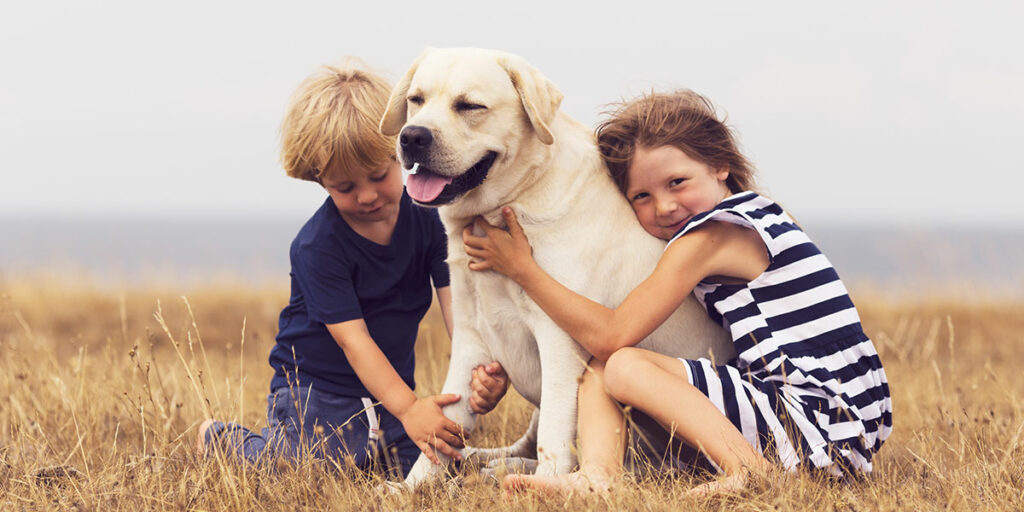
One of the most frequently asked questions I get from parents with children is “what is the best breed to get for a child?”
The reality is that there really is no single answer. Almost any dog has the potential to be good with children – however there are always factors you should consider before choosing a dog.
Certain breeds are supposed to be more child-friendly, but you just never know how each individual dog will turn out.
There are so many reasons why a certain dog will do well with children and another dog will react badly to children and these reasons are not always concerning the dog!
In any household, with any dog, it’s important that the children are taught how to conduct themselves around dogs and how to respect their dogs always.
THINGS TO CONSIDER:
THE FIRST QUESTION in a long list of questions is always “how does your child currently respond to dogs? Are the children afraid of dogs or are they not bothered? How much exposure have they had to dogs in the past?”
If a child is frightened of dogs – don’t get a dog. It’s inevitably going to end in disaster.
After all, you don’t put spiders in your house and bedroom to help you get over your fear of spiders. Rather speak to a qualified child therapist to address the fear, before you introduce a dog to your household.
THE NEXT QUESTION is “do you want a dog for your child OR does your child want a dog?”
If your child wants a dog, be aware that you are going to be the primary caregiver – even if your child promises to look after the pet, it usually ends up being the parent’s responsibility.
Puppies need socialization and they need training too. They require housetraining, management and attention, so make sure that you can definitely meet those needs if your child does not.
You also need to consider your child’s age and how active he/she is. Crawling babies and toddlers can be stood on or knocked over by a bouncy, awkward, gangly teenage dog who does not know his own size.
And then of course children could accidently hurt or drop a small dog if they are not always careful.
So if your child is not comfortable with dogs, look at getting a dog with a quiet temperament and low to moderate energy level and of a small to medium size.
In some cases, an adult dog who has grown up with children and was part of family life in that home, would be a better choice than an excitable jumpy puppy, and maybe the best dog for a family with kids.
Certain breeds may indeed be more tolerant of children and you will need to do some research into the breeds to see which one would suit your kids and your lifestyle.
TIP: It’s always very useful to look at the original function of a dog – if he was bred to herd sheep, it’s likely that he will herd children! If your child has allergies you would need to look at breeds that don’t shed very much or at all.
SUGGESTED DOG BREEDS TO RESEARCH:
TIP: Regardless of the dog you like – it’s a given that any dog should be socialized and should attend puppy class. Genes influence 50% of a dog’s behaviour, so even if a dog is predisposed to tolerate children, it won’t matter if you don’t provide the education to support the potential – and the other 50% of what goes into a dog is nurture!
1. LABRADORS / GOLDEN RETRIEVERS:
- Traditionally Labradors and Golden Retrievers have been known to be tolerant with children; and they are usually pretty responsive to training.
- They’re active dogs who were bred to work and retrieve – thus they’re extremely mouthy! You’ll need to keep the children’s toys out of reach and your Labbie needs enough of his own toys to satisfy his chewing needs.
- They usually love swimming, but they can also be very bouncy and energetic, which may be a handful for the first four years or so, particularly if you have young children.
2. POODLES:
- Poodles are usually very responsive to training and can be great fun without being too much work in terms of energy and exuberance.
- They generally love to learn, so trick training can be a great activity for kids to engage in with their dog. They come in three sizes, toy, miniature or standard.
- Regular grooming is of course necessary, which can be quite time consuming if you don’t use a groomer.
3. BICHON FRISE:
- Even though they are not very common in South Africa, the little Bichon Frise is a perfect size for small children.
- This cotton-ball look alike requires regular grooming though, which you should take into consideration.
- Socialization is necessary to make sure the dog is comfortable with children.
4. BEAGLES:
- Beagles are very good with problem solving and respond well to training with a trainer who understands that their noses rule their lives.
- They are a lot of active and can be a lot of fun.
- Their short coats make them easy to keep clean, but keep in mind that they do still shed so they require regular brushing.
5. BASSETS:
- Bassets are very laid-back dogs. Anyone who has ever had a Basset will tell you that they are lovely, but lazy.
- Housetraining can be a problem, as they tend to err on the side of “not today!”
- You would need to be aware of health problems such as back injuries or arthritis, which can make a dog intolerant of children touching or petting or playing with him too roughly.
6. MIXED BREEDS:
- Then of course, there are all the mixed breed dogs, who are often the most well balanced and physically sound of all the dogs.
- Spend time with the puppy of your choice and see how he is. If he’s too much of a handful at 8 weeks of age, don’t fool yourself into thinking that he will naturally just ‘grow out of it’. If you are overwhelmed by the pup at 8 weeks, you probably will be when he’s 8 months too.
ADOPTING YOUR DOG:
1. RESCUES:
When you are ready to make the commitment, visit some reputable local rescue groups or look online for one of the many shelters in your area.
Find out about dogs who have been in foster care. Their foster “parents” know and love them and they really want the dogs to go to the right homes. They will be completely honest about the dogs’ personality and temperament.
2. PEDIGREES:
Want a pedigree dog? Go to a reputable breed-specific rescue organization or make sure that you only support a reputable, ethical breeder.
If you decide to get a pedigree dog from a breeder; research breeders and get as much information about their dogs.
In the event they allow you names of some of the people who have taken their past puppies; call these people and see what their dogs are like.
Reluctant to share that information? Then be careful!
A good breeder will be happy to share their success stories. Don’t be fooled by ribbons and trophies, dogs win these based on their outward appearance. If you are looking for a pet companion, you need to focus on personality and temperament; and that has nothing to do with looks.
Ask the breeder questions about socialization and training.
Find out if they allow people to visit, handle and interact with the pups before they are 8 weeks old. If you bring a change of clothes and you disinfect your shoes; you’re unlikely to pose a health threat to a pup who is 5 or 6 weeks old.
HOWEVER if your pup only meets strangers for the first time when he’s 8 or 10 weeks old; it’s too late and you may end up with a nervous, terrified dog!
Also ask to interact with the pup’s parents. Remember photos and dogs behind gates tell you nothing of the personality.
You can ask for the breeder’s vet details too; to contact the vet for a reference about care given to the dogs. If the vet has seen four litters of puppies from the same breeding pair in the last year, be careful. Most ethical breeders will not breed their dogs every time they come into season, but puppy mills may.
CONCLUSION:
Your work really begins once you have found your new dog.