


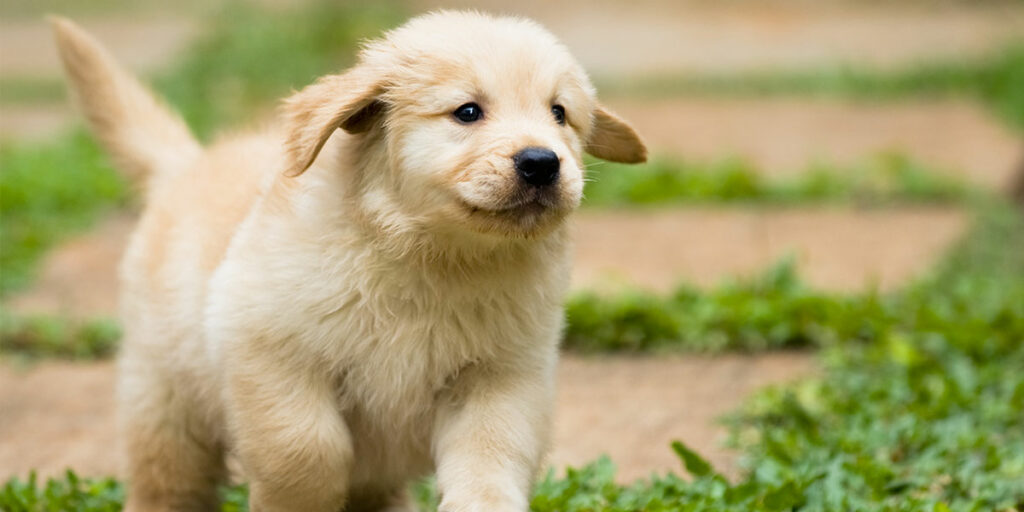
How to introduce your puppy to the world? Great question, because little puppies don’t come into our world with ready knowledge about humans; or the world in which we live.
They need to learn all about us, car rides, vacuum cleaners, weaving bicycles, and more. If they don’t have a chance to learn about the people, animals, and things in their environment; they may grow up to be fearful, anxious, antisocial adults.
This can usually be prevented with early socialisation; and gradual exposure to as many people, animals, sights, sounds, and places as possible.
SO … CONSIDERING GETTING A NEW PUPPY?
Then it is best to get him at approximately seven weeks old; or even a bit later.
Before this time, a puppy needs to be socialised to his mother and littermates. From seven weeks on, it is critical that puppies socialise with humans.
BEFORE BRINGING YOUR PUPPY HOME
Create a vocabulary list everyone will use. If mom says “down” when puppy climbs on the couch, dad says “down” when he wants him to lie down, and junior utters “sit down” when he expects the pup’s rear to hit the floor, the result will be one confused dog!
Putting the schedule and vocabulary list in writing prevents confusion; and will help dog walkers, nannies, and others involved in raising puppy.
If you have children, hold one last meeting to lay down the rules: Don’t overwhelm Pup the first day, and don’t fight over him.
PUPPY-PROOF YOUR HOME
- Puppy-proof the areas where your puppy will spend most of his time
- Tape loose electrical cords to skirting boards
- Store household chemicals on high shelves
- Remove plants, rugs, and breakables from puppy’s reach
- Set up the crate if you’re using one
- Install gates to restrict access
Once you think your home is completely puppy-proof, lie on the floor and look around once more to get a puppy’s eye view and make necessary adjustments.
GETTING OFF ON THE RIGHT PAW
Consistency is important. When you pick up your pup, ask what and when he was fed and do the same for at least the first few days to avoid tummy upsets. If you wish to switch to a different brand, gradually introduce the new food over a period of about a week.
When travelling in the car, your puppy should sit in the back seat, preferably in a crate or carrier. If you aren’t able to get one of a suitable size then use a SAFETY CLIP that attaches to your puppy’s harness and clips into the safety belt socket.
Once home, take him to his toileting area immediately. From there, carry out your schedule for feeding, toileting, napping, and play/exercise.
From day one, your puppy will need family time and brief periods of solitary confinement. Solitude may be new to him, so he may vocalize concern. Don’t give in and comfort him or you may create a monster. Give him attention for good behaviour, such as chewing on a toy or resting quietly.
SOCIALISATION AND HOW TO INTRODUCE YOUR PUPPY TO POTENTIAL FRIENDS
If the first few months of your puppy’s life pass without him making necessary social contacts, irreparable damage may result, leading to fear, timidity or aggression. Since the most sensitive period for puppy socialisation occurs during the first 12 weeks of age, you should begin the socialisation process as soon as you get your new puppy and continue into adulthood.
- Start with quiet, one-person introductions and gradually include more people in noisier situations.
- Invite friends, relatives, children and their pets to come to your home to meet, greet, and play with your puppy.
- When your vet says your puppy is adequately vaccinated, take him on as many short walks and outings as possible.
- Initially avoid situations that might be high risk for disease, such as neighbourhood parks or areas with stray dogs.
- To make new introductions special, give a small biscuit to your puppy whenever he meets someone new.
- As soon as your puppy can sit on command, have him sit when he meets new people.
- Let each new friend give him a healthy treat. This teaches your puppy to greet properly, rather than lunging or jumping up on visitors.
- Introduce your puppy to a wide variety of people of all ages and appearances, including children. This ensures your puppy is comfortable around everyone.
SHOULD YOUR PUPPY ATTEND TRAINING CLASSES?
Puppy training classes are an excellent way to promote socialisation early. Start training your puppy from as early as 8 weeks of age, before he picks up bad habits and when learning is rapid. These classes not only help puppies get off to a great start with training, they also offer a wonderful opportunity for important social experiences with other puppies and people. Ask your vet or contact COAPE SA about classes available in your area.
DISCIPLINING YOUR PUPPY
Avoid negative training methods that involve physical discipline, such as swatting your puppy, thumping him on the nose, and rubbing his face in a mess. These methods can teach your dog to fear the human hand or to become a fear biter.
It’s always preferable to reward good behaviour. During the early months of your puppy’s life, try avoiding interactions with people who make him anxious.
HOW TO INTRODUCE YOUR PUPPY TO ALL THE SIGHT AND SOUNDS IN HIS ENVIRNOMENT
- As your puppy matures, new sounds and situations can lead to fear and anxiety. Frequently expose your puppy to different sights, sounds, odours, and situations from an early age so he gets used to living in our busy and noisy world.
- Take repeated, short car rides to minimize anxiety associated with travelling. Always ensure it’s a good experience.
- Expose your puppy to the sound like traffic, sirens, airplanes, water, elevators and alarm clocks.
- If your puppy seems to be very cautious or nervous when first introduced to new situations or stimuli, start off with mild exposure and give food rewards for non-fearful responses.
- Never give rewards while your puppy is showing fearful behaviour – this only rewards the very response you are trying to discourage.
- Build your puppy’s exposure up to more intense noise or situations gradually.
- Recordings of a variety of environmental sounds are available if it’s difficult to expose your puppy to sufficient stimuli in your own neighbourhood.
- Properly socialising and shaping your puppy’s temperament requires an investment in time. You will find that your efforts are worthwhile when you become the proud parent of a sociable, friendly and, most importantly, happy dog!