As pet owners, keeping our furry friend happy and healthy is a top priority. While we often focus on things like diet and exercise, one crucial aspect that often gets overlooked is oral care.
The ‘tooth” is your pet’s dental health plays a vital role in their overall health and well-being.
Keeping their teeth & oral hygiene in check is easier than you might think.
Here are some tips to make pet dental care a simple and enjoyable part of your routine.
Is my pet’s smelly breath normal?
Short answer is “NO”
If you want to run for the hills every time your pet yawns, you aren’t alone.
Halitosis (bad breath) is quite common and often signals that your pet has oral care issues that need attention.
Gone are the days when stinky breath was dismissed as just ‘doggy breath’. Now, it’s recognised as a valuable tool for vets to pick up health issues, the most common being periodontal disease.
To truly get rid of your pet’s bad breath, you need to address the ‘root’ cause. Schedule annual dental checkups with your vet.
A good home care routine with the right products will help to reduce bad breath, maintain your pet’s overall health and quality of life.
What is the best way to keep your pet’s teeth clean?
As with us humans, brushing your pets’ teeth daily is the gold standard of oral health care.
Use a soft-bristle pet toothbrush and pet-safe toothpaste, followed by a pet-friendly dental gel, rinse or drops.
NEVER use human toothpaste, it can be toxic to your pet.
Start a brushing routine when your pet is a puppy or kitten to help them get used to it early on. They might be a bit unsure at first, but with patience, praise and treats , they’ll adjust.
For adult pets, it can take more time, but positive reinforcement will help them get comfortable with the toothbrush, toothpaste, and the treat for their cooperation..
TOP TIP:
Place a small amount of toothpaste on your finger and offer it to your pet daily for several days as a reward or treat. Then progress to rubbing the toothpaste across their teeth before introducing the toothbrush. This will condition your pet to view brushing as fun and rewarding.
Easy-to-Use Products for Your Pet’s Home Dental Care Routine
Let’s be real—most of us don’t brush our pets’ teeth regularly (guilty!). If that’s you, check out these quick and easy dental care products. They’re not a replacement for brushing, but hey, something is better than nothing!
And for those who do it all right (🏆 👏), these will perfectly complement your pet’s dental care routine.
Dental Gels & Rinses
Dental gel, rinses and drops are easy to apply and help keep your pet’s teeth clean. These products can be used between brushing and have enzymes or antimicrobial agents that help reduce tartar and plaque build-up.
Dental Wipes
Pre-moistened wipes are gentle on your pet’s gums and help clean their teeth effectively. They’re especially helpful for pets that won’t tolerate brushing or have smaller mouths which make it difficult to brush.
Dental Water Additives
Dental water additives are liquid solutions that you add to your pet’s drinking water to help control plaque and tartar build-up. While they don’t replace brushing and professional cleanings, they’re a convenient addition to your pet’s daily routine.
Did you know some breeds are more susceptible to developing dental issues than others?
Dental Diets:
There are pet foods specifically designed for pet’s that are prone to or have dental issues to help clean their teeth, reduce plaque and tartar build-up.
These dental diets for dogs and cats are made with ingredients and a special texture or shape that encourage more chewing compared to regular food. The extra chewing time helps the kibble scrub the teeth, and it also boosts saliva production, which helps wash away food debris.
*Always remember, as great as these diets are, they should be an addition to your pet’s dental care routine and shouldn’t replace brushing with a toothbrush and toothpaste.
From Eukanuba’s 3D DentaDefense technology that cleans with every bite and is proven to reduce tartar buildup, to Hill’s advanced oral care technology with interlocking fibers in the kibble that mimics the action of brushing, there’s a lot to choose from when it comes to keeping your pet’s teeth healthy.
Dental-Friendly Pet Treats
Dental treats for dogs & cats are a game-changer for maintaining your fur-friend’s oral health. They’re not just tasty snacks; they help clean teeth, reduce plaque and tartar buildup, as well as freshen breath while your pet enjoys a treat (most of them are low-calorie too – BONUS!)
VeggieDent, with its Z-shaped design, improves chewing and grip, while also freshening breath and reducing plaque and tartar. Enhanced with FR3SH™ Technology, they specifically target oral causes of bad breath.
Another great option is the Whimzee Range, offering a range of unique shapes and textures, they have been clinically proven to significantly reduce plaque and tartar formation and promote dental health.
And for our feline-family, the Whiskas Dentabites, endorsed by the British Veterinary Dental Association (BVDA) are delicious treats with a special texture that help reduce tartar buildup and dental deposits in cats when fed daily.
Dental-Friendly Pet Toys
Dental toys for dogs & cats are a fun and effortless way to promote oral health. These toys often feature textures and materials that help clean teeth, massage gums, and reduce plaque and tartar buildup, all while providing an engaging and enjoyable experience for your pet.
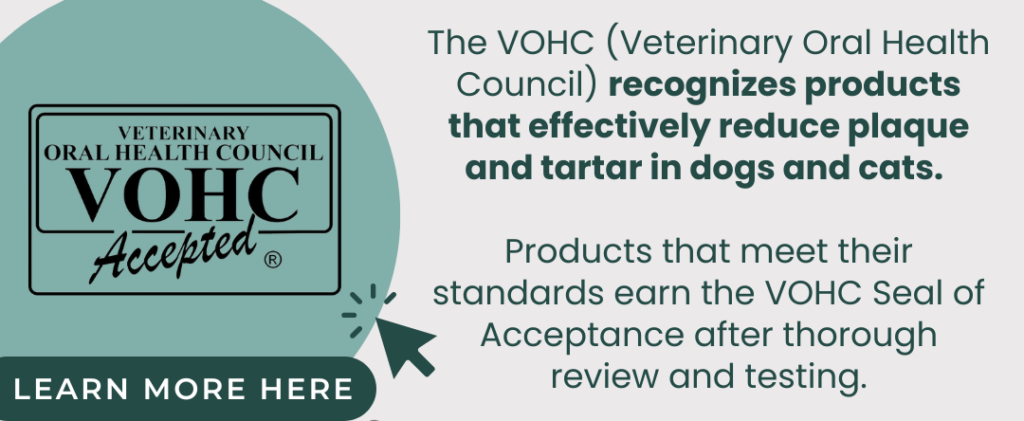
TOP TIP: When buying products to add to your home care dental routine, look for VOHC (Veterinary Oral Health Counsel) approved products
At-Home Dental Checks: What to Watch Out for with Your Pet’s Teeth
Keep an eye out for any signs of dental issues in your pet. Be on the lookout for these warning signs:
- Bad breath
- Drooling excessively
- Difficulty eating or chewing.
- Swollen, bleeding, or red gums.
- Loose or broken teeth
- Changes in eating habits
- Pawing at the mouth or face
- Weight loss
If you spot any of these signs, be sure to check in with your vet right away.
In conclusion, taking care of your pet’s teeth doesn’t have to be difficult or time-consuming.
Adding dental treats, toys, gels, sprays, wipes, and water additives to your pet’s dental routine can make a significant difference in their oral health.
That said, nothing can replace a regular oral health exam at your vet or annual/biannual teeth cleanings.
Just like humans, professional dog and cat teeth cleanings reach places that a toothbrush alone cannot.
BONUS
A healthy mouth for your pet means fewer vet bills too—less ‘chew’ on your wallet!
Tor tips, recommendations and advice get in touch with our friendly and knowledgeable customer care team .